& Repair Services in Atlanta
Response Time
5.0 Ratings based on 638 reviews - Local Experts, Local Reviews
A floor can look dry and still have water underneath it. Moisture can also sit inside walls or behind baseboards where you won’t notice it right away. Household fans help dry the surface, but they don’t show where the water went or what is still wet. At Tidal Wave Response, our water damage restoration process includes professional water removal and structural drying for those harder-to-reach areas. Below, we’ll look at where water tends to collect, how drying equipment works, and why a fan won’t handle serious water damage.
After a leak or indoor flood, water moves into seams, gaps, low spots, and porous materials. A puddle on a finished floor can work its way beneath plank flooring, along the edge of a wall, or into the space between the finished floor and subfloor. Once water reaches those hidden areas, a box fan blowing across the room has little effect on the material underneath.
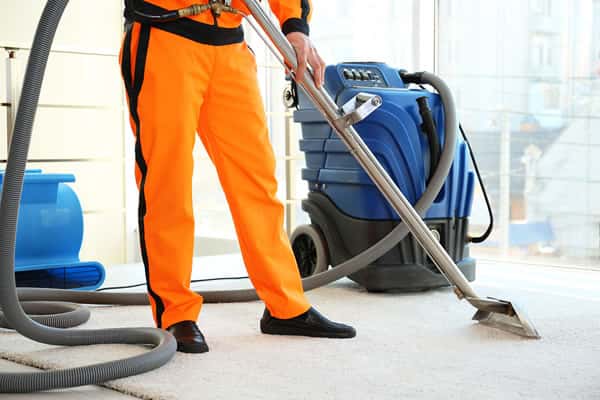
Professional water removal starts by extracting as much liquid water as practical before drying equipment does the slower work of removing absorbed moisture. Extraction is especially important with carpet, pad, low areas, and other places where water has collected. Removing liquid water first shortens the amount of moisture that must later evaporate into the air.
Where the water went also changes the drying plan. If a washing machine supply line leaks beside a wall, the water can reach the flooring, wall plate, drywall, insulation, and even nearby rooms through shared cavities. A household fan only moves air across the area in front of it. Structural drying deals with all of the affected materials together.
Drywall can stay wet inside even after the face looks dry. Its gypsum center is covered with paper, and water can travel upward from the bottom edge. The stain you see on the wall doesn’t always mark the full wet area. Moisture may still be sitting deeper in the drywall or on the back side facing the wall cavity.
Wood subflooring reacts differently. Plywood and oriented strand board can take in moisture through edges, seams, fastener holes, and exposed areas. Too much moisture causes swelling or changes in the size of the panels. The flooring above it also affects how well the subfloor dries. Sheet vinyl, laminate, engineered flooring, carpet pad, and other materials all allow moisture to escape at different rates.
Insulation brings its own set of problems because the right response depends on the material and the type of water involved. Wet cellulose insulation is commonly removed instead of dried in place. Saturated fiberglass insulation also needs to be checked carefully. Inside a closed wall, insulation can keep moisture against framing or drywall where normal room airflow barely reaches it.
These differences are one reason water damage restoration requires more than placing fans around the room. A trained restoration technician considers which materials got wet, where the moisture traveled, whether assemblies need to be opened, and which materials remain suitable for drying. The answer for a hardwood floor may differ from the answer for saturated drywall or insulation. Professional restoration standards account for building materials, drying technology, instruments, and structural restoration as separate parts of the process.

Hi. I don’t know where to start. John and Tidal wave his company were and still are a blessing from my Lord. One morning in January of this year I went down stairs and stepped in a puddle of water it was flooded. I also passed out. This was the second one in less than a year. I stood there for a minute and just cried. All I could think of was my insurance company may not take care of it a second time even if it was for a different leak. The last claim they paid out $23,000 for…
John Mayer, Principal of Tidal Wave Response, and his project management team, lead by Colin Galubinski, has completed the restoration of my home in record time. The work included, but was not limited to the following: 1) Professional water leak detection 2) Professional plumbing that removed the concrete slab and backfill material, found and repaired the PEX cold water pipe 3) Backfilled and placed concrete to finish grade 4) Packed the furniture to storage. Restored the furniture without incident nor damage. 5) Dehumidified and removed the damaged carpet and hardwoods. 6) Cleaned the concrete surface and installed the new hardwoods.…
I have worked in sales and also have experience in launching my own business. It is rare that you find a company that genuinely has your best interest in mind. Not only was John helpful outside of his business’ expertise, but he sent Chris to do a *free* evaluation of our water damage. John and Chris were both genuine and personable. They cared about what our situation was and they weren’t looking to get any sort of “fee” for their time. These are the kind of people you trust to handle big, catastrophic water damage to. I have previously had…
While others might categorize John as a fast talker, but on the other hand. I saw a man that's passionate about his business and willing to help others elevate their present situation. In early December 2022, our laundry room floor and wall got water damaged due to leakage from the hotline pipe, and other rooms got impacted due to water spreading. So, I reached out to John and he assured me they'll do everything within their power to get our house done before Christmas day. Boy was he right! John and the tidalwave response team were professional, helpful and got…
We did not plan to renovate our terrace level but when the hot water heater leaked and flooded the entire area, Tidal Wave was recommended to us by the plumber who installed the new hot water heater. John, the owner was at our house the same evening and mitigation started early the next morning. The crew professionally removed wet drywall, flooring, and baseboard. Fans and dehumidifiers ran for several days and then the fun began. With Colin's help we were able to choose updated flooring, repaint a color of our choice, and new trim was installed. Everything was completed professionally.…
Wow incredible company! I had a water damage that destroyed my entire main level. John and his team are very quick and efficient. When I was looking on google, tidal wave response was the only water restoration company with a 5 star review. Highly recommended using tidal wave response!!
I had a flood in my downstairs living room. It was devastating. John with Tidal wave was very professional. He had his team show up immediately to get the job done. Great work Tidal Wave. I'm definitely going to refer you to others.
Thank Goodness !!! Johnny on the spot! We had a pipe ruptured in the ceiling and we were looking for a 5 Star Rated Water Restoration company . Johnny came out with a Thermal Camera and found the pipe spraying behind the wall. I wish I would have called him sooner . My wood floors were so damaged by the water, they all will need to be replaced. We highly recommended Johnny with Tidal Wave. Very knowledgeable and even helped us start a claim with our insurance ..
Had a shaky start with this particular project but I must say the owner took charge and corrected all the remaining issues. I will say that this particular job was the absolute worst I have taken on in 45 yrs. My hat is off to Mike and his crew and Allan was superb in making sure everything was done correctly. Thank you for your follow-up on this project guys. And Allan thank you especially for your thoroughness in making sure it was completed correctly.
Unfortunately, my water heater was old, cracked, and leaking water onto the supported area in my garage. I needed to replace the water heater with a new one, but the plumber told me that in order to meet the city code, I would have to handle the water damage first. I called out tidal wave (who I’ve worked with before), and they came out the very next day to cut out the affected area and treat for mold. This is my second issue with water in my house and tidal wave has taken care of both issues. They are fast,…
You can usually spot obvious water damage, but hidden moisture is harder to judge. Warped flooring, stains, peeling paint, or swollen trim can all point to a problem. Still, a material can look normal and remain wet inside. Moisture meters give restoration technicians a way to check those areas, compare them with dry materials nearby, and see if the moisture level is coming down.
Different meters are used for different jobs. Pin-type meters use probes that enter the material and give a reading in one specific spot. Pinless meters check below the surface without leaving probe holes. Restoration teams may also use thermal imaging to find temperature patterns that need more testing. A thermal image doesn’t measure moisture by itself, so those areas still have to be checked with a moisture meter.
Those readings can also show how far the water spread. A hallway may look dry, for example, while meter readings near the baseboards are still high. That section may need to be added to the drying area. If moisture is found inside a wall, a technician may remove a baseboard or make an access opening so controlled airflow can reach the cavity. The drying plan is based on actual readings rather than what looks dry from the outside.
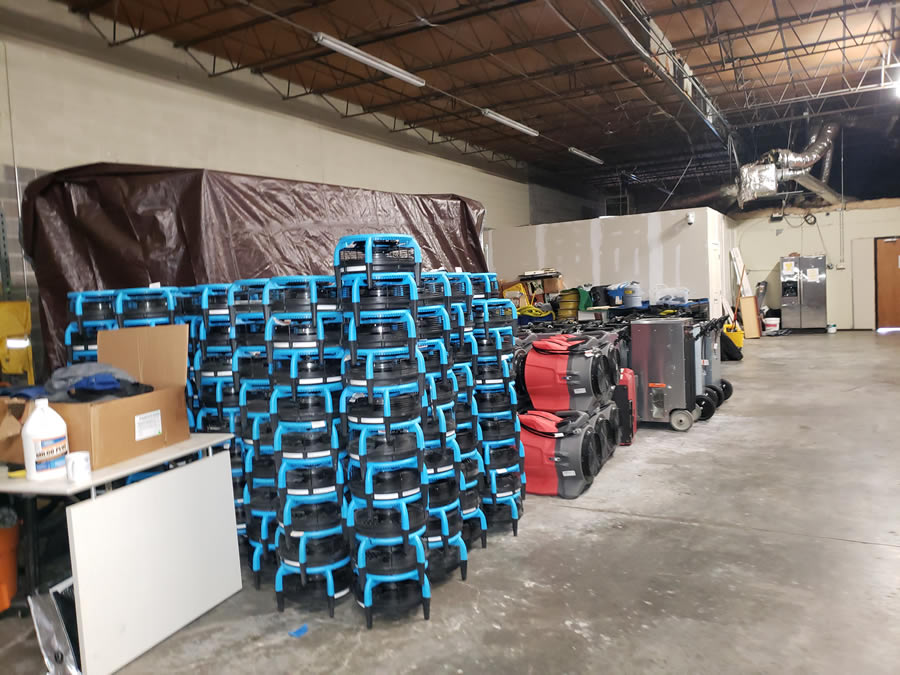
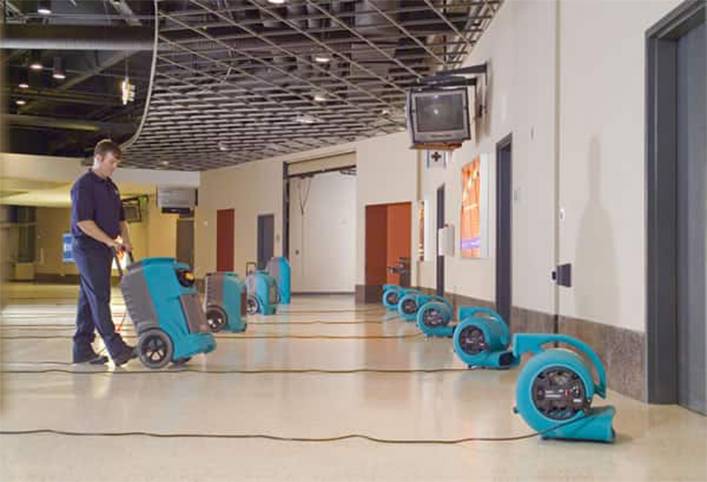
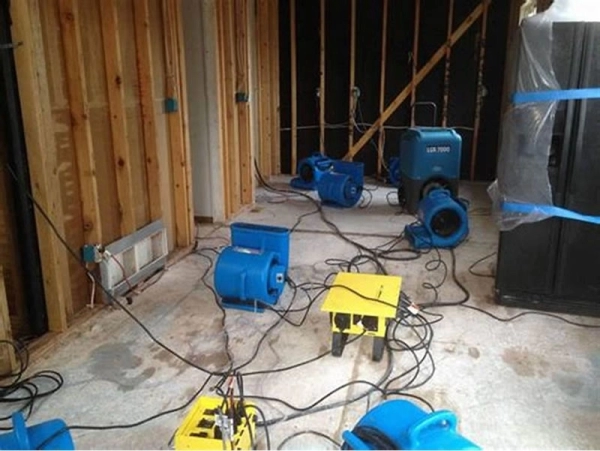
Professional structural drying depends on two things happening together. Moisture has to leave the material, and moisture has to be removed from the air. Air movers push high-velocity airflow across wet surfaces, which helps water in porous materials turn into vapor and move into the room. Once the moisture is in the air, though, it still needs to be taken out.
That’s where dehumidifiers come in. As wet materials release water vapor, indoor humidity climbs. If too much moisture stays in the air, it becomes harder for the materials to keep drying. Several household fans in a closed room may keep humid air moving around without actually removing much of the moisture.
Where the equipment is placed also makes a difference. Restoration technicians set up the drying area based on how much space is affected, which materials are wet, how much water is present, and the conditions inside the building. Air movers have to reach the wet surfaces, and dehumidifiers need enough circulation through the drying area to work well. Open doors, containment barriers, removed trim, exposed wall cavities, or lifted flooring can all change the way air moves through the room.
That is the key difference between a household fan and a professional drying setup. A fan moves air. Structural drying moves moisture out of the building materials and removes it from the drying area.
A room looking dry isn’t enough reason to remove the equipment. Restoration professionals keep checking moisture levels and compare wet materials with dry areas nearby. The type of material and the conditions in the room also matter. Drying continues until those readings show the affected materials have reached the proper moisture level.
Starting quickly also helps limit additional problems. The U.S. Environmental Protection Agency recommends drying water-damaged areas and items within 24 to 48 hours when possible to reduce the chance of mold growth. That doesn’t mean every building will be completely dry in two days, but water extraction, removal of materials that can’t be saved, airflow, and dehumidification should get underway as soon as possible.
If a pipe bursts, an appliance leaks, or water gets into the house for another reason, don’t rely on what the floor or walls look like. Proper water removal and moisture testing help find the materials that are still wet before structural drying gets underway. Additional readings during the job show when those areas have finally dried enough.
Tidal Wave Response provides professional water damage restoration in Kennesaw, GA with the equipment and drying methods needed to handle serious moisture problems. Reach out to our team today to schedule an appointment.
From emergency water extraction to full property recovery, Tidal Wave Response provides the fast, expert care you need. Browse our complete suite of 24/7 restoration services below to see how we can help today.
Explore all servicesClean Water vs. Black Water: Understanding the 3 Categories of Water Damage A flooded room doesn’t always tell you how dangerous the water is. Water from a broken supply line is very different from sewage or runoff that’s entered the house, and those differences affect how the cleanup should be handled. At Tidal Wave Response, water damage restoration in Johns Creek, GA starts with identifying the source and determining which contamination category applies to the loss. Keep reading to learn…