& Repair Services in Atlanta
Response Time
5.0 Ratings based on 638 reviews - Local Experts, Local Reviews
The floor might feel dry after running a few fans, but that doesn't mean the water is gone. Moisture can remain trapped beneath flooring, inside walls, and in other materials long after the visible puddles disappear. Tidal Wave Response knows how quickly hidden moisture can lead to mold growth, damaged building materials, and repairs that could have been avoided. Professional water removal is an important first step, but proper water damage restoration in Duluth, GA also involves finding and drying the areas you can't easily see. Here's why fans alone aren't enough after flooding and what it takes to get your home properly dried out.
A fan only reaches exposed surfaces. Once floodwater gets into carpet padding or beneath a finished floor, the air moving through the room won't reach much of it. Even drywall and insulation that look dry from the outside can still be wet.
Drywall is extremely vulnerable because its paper facing and gypsum core easily absorb water. Plywood and oriented strand board take in moisture around their edges and through exposed surfaces, and drying can take longer once water has penetrated the material.
Vinyl and laminate flooring holds moisture against the subfloor by limiting evaporation. If the underlayment is wet as well, the trapped water has even less opportunity to escape. Some floors have to be opened or dried from underneath before the moisture will come out.
During water damage restoration, technicians check the moisture content of the materials rather than judging the room by its appearance. A dry surface tells them very little about what's happening below it.
A leaking washing machine doesn't have to flood an entire room to cause widespread damage. Water will run beneath cabinets and through flooring joints and reach adjoining rooms without leaving much evidence on the surface.
Drywall pulls water upward from a wet floor through capillary action. The tiny pores inside the material absorb moisture, which is why damage sometimes extends several inches above the original water level. Gaps around baseboards and plumbing give water access to the wall in the first place.
Flooding from a broken water supply line is different from a sewage backup or water entering from outdoors. Sewage and floodwater can carry bacteria, chemicals, and other contaminants into drywall, insulation, and flooring. Even after these materials have dried, they may not be safe to leave in place. Some will need to be removed and replaced, depending on what the water contained and how badly the materials were affected.
Hi. I don’t know where to start. John and Tidal wave his company were and still are a blessing from my Lord. One morning in January of this year I went down stairs and stepped in a puddle of water it was flooded. I also passed out. This was the second one in less than a year. I stood there for a minute and just cried. All I could think of was my insurance company may not take care of it a second time even if it was for a different leak. The last claim they paid out $23,000 for…
John Mayer, Principal of Tidal Wave Response, and his project management team, lead by Colin Galubinski, has completed the restoration of my home in record time. The work included, but was not limited to the following: 1) Professional water leak detection 2) Professional plumbing that removed the concrete slab and backfill material, found and repaired the PEX cold water pipe 3) Backfilled and placed concrete to finish grade 4) Packed the furniture to storage. Restored the furniture without incident nor damage. 5) Dehumidified and removed the damaged carpet and hardwoods. 6) Cleaned the concrete surface and installed the new hardwoods.…
I have worked in sales and also have experience in launching my own business. It is rare that you find a company that genuinely has your best interest in mind. Not only was John helpful outside of his business’ expertise, but he sent Chris to do a *free* evaluation of our water damage. John and Chris were both genuine and personable. They cared about what our situation was and they weren’t looking to get any sort of “fee” for their time. These are the kind of people you trust to handle big, catastrophic water damage to. I have previously had…
While others might categorize John as a fast talker, but on the other hand. I saw a man that's passionate about his business and willing to help others elevate their present situation. In early December 2022, our laundry room floor and wall got water damaged due to leakage from the hotline pipe, and other rooms got impacted due to water spreading. So, I reached out to John and he assured me they'll do everything within their power to get our house done before Christmas day. Boy was he right! John and the tidalwave response team were professional, helpful and got…
We did not plan to renovate our terrace level but when the hot water heater leaked and flooded the entire area, Tidal Wave was recommended to us by the plumber who installed the new hot water heater. John, the owner was at our house the same evening and mitigation started early the next morning. The crew professionally removed wet drywall, flooring, and baseboard. Fans and dehumidifiers ran for several days and then the fun began. With Colin's help we were able to choose updated flooring, repaint a color of our choice, and new trim was installed. Everything was completed professionally.…
Wow incredible company! I had a water damage that destroyed my entire main level. John and his team are very quick and efficient. When I was looking on google, tidal wave response was the only water restoration company with a 5 star review. Highly recommended using tidal wave response!!
I had a flood in my downstairs living room. It was devastating. John with Tidal wave was very professional. He had his team show up immediately to get the job done. Great work Tidal Wave. I'm definitely going to refer you to others.
Thank Goodness !!! Johnny on the spot! We had a pipe ruptured in the ceiling and we were looking for a 5 Star Rated Water Restoration company . Johnny came out with a Thermal Camera and found the pipe spraying behind the wall. I wish I would have called him sooner . My wood floors were so damaged by the water, they all will need to be replaced. We highly recommended Johnny with Tidal Wave. Very knowledgeable and even helped us start a claim with our insurance ..
Had a shaky start with this particular project but I must say the owner took charge and corrected all the remaining issues. I will say that this particular job was the absolute worst I have taken on in 45 yrs. My hat is off to Mike and his crew and Allan was superb in making sure everything was done correctly. Thank you for your follow-up on this project guys. And Allan thank you especially for your thoroughness in making sure it was completed correctly.
Unfortunately, my water heater was old, cracked, and leaking water onto the supported area in my garage. I needed to replace the water heater with a new one, but the plumber told me that in order to meet the city code, I would have to handle the water damage first. I called out tidal wave (who I’ve worked with before), and they came out the very next day to cut out the affected area and treat for mold. This is my second issue with water in my house and tidal wave has taken care of both issues. They are fast,…
The amount of water vapor already in the air affects how quickly more moisture evaporates. Warm air has a greater capacity for water vapor, but high relative humidity still slows drying. Running more fans won't solve that problem if the moisture has nowhere to go.
Water vapor can settle on cooler surfaces elsewhere in the house. Condensation around windows or metal ductwork may appear even though those areas weren't touched by the floodwater.
Opening windows helps only when the outdoor air is suitable for drying. During a humid Georgia summer, ventilation could bring more moisture into the house. Your air conditioner removes some humidity, but its normal operation isn't intended to manage the amount of water released during flood cleanup.
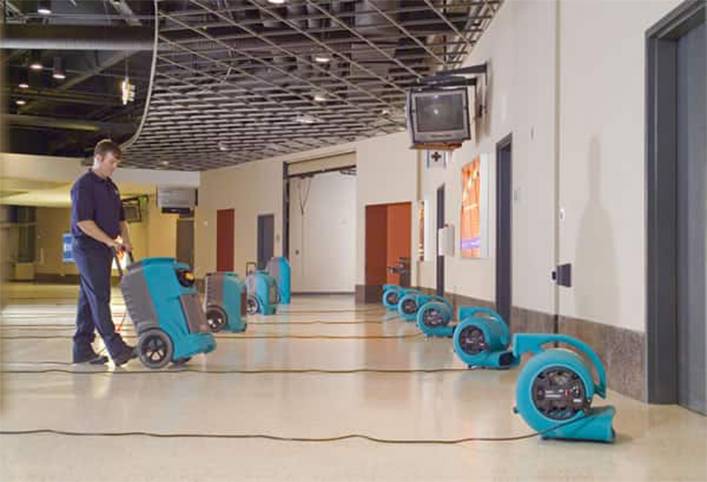
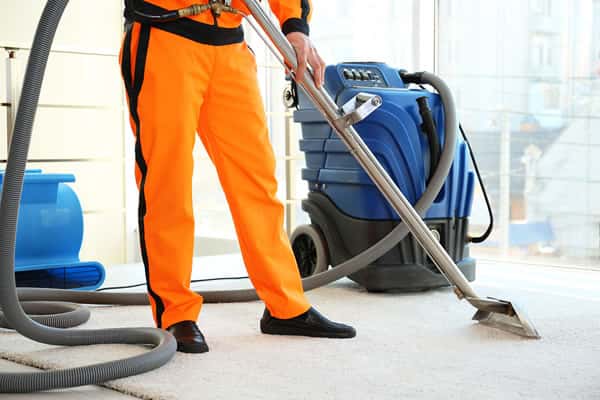
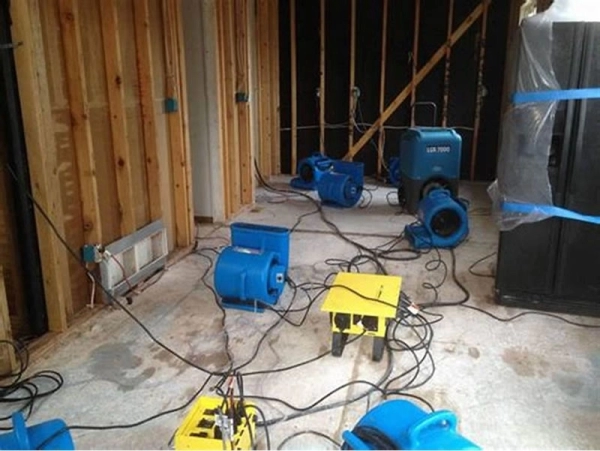
Restoration crews use air movers to encourage evaporation and dehumidifiers to remove the resulting water vapor. The balance between the two is critical. Faster evaporation accomplishes little if the moisture simply accumulates in the room.
After the source of flooding has been stopped and the area is safe to enter, the first priority is extracting standing water. Extraction equipment removes large quantities of liquid much faster than evaporation alone.
Carpet padding may need to be extracted separately or removed, depending on how badly it's soaked and whether the water was contaminated. Damaged drywall sometimes has to come out as well, particularly when wet insulation or framing can't be reached without opening the wall.
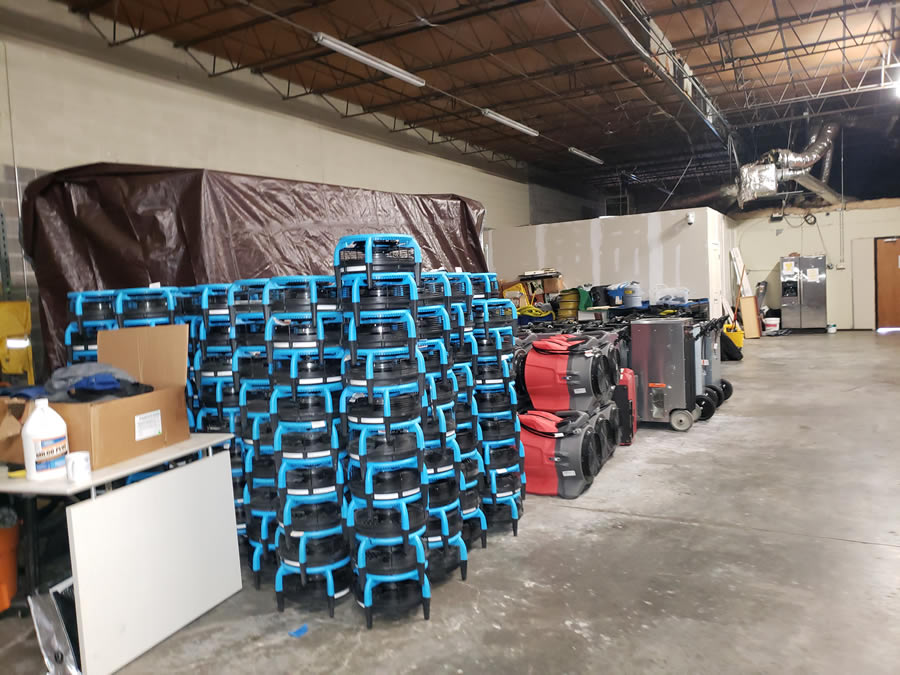
Materials that are safe to keep can then be dried with equipment selected for the affected area. The tools have different jobs:
Where technicians place the equipment affects how well it works. Air movers need to reach the wet surfaces without spreading contamination, and dehumidifiers must be sized for the moisture present. Some rooms also need temporary barriers to separate the drying area from the rest of the house.
There's no reliable way to set a drying deadline based solely on how long the water was present. Dense wood and saturated flooring can hold moisture well after lighter materials have dried. Technicians check readings throughout the process and change the equipment setup when an area isn't drying as expected.

Before new flooring goes down, the subfloor needs to be checked for moisture. The same applies to walls before they're painted or fitted with new trim. Covering damp materials too soon can mean tearing out the repairs later when the trapped moisture causes problems.
Moisture meters help determine how much water remains in building materials. Some use probes to measure electrical resistance, while others check beneath the surface without leaving holes. Readings can vary depending on the material, and nearby metal fasteners sometimes interfere with the results.
Thermal imaging can help locate areas worth checking more closely. The camera picks up temperature differences, including cooler spots associated with evaporation. But cold air leaking through a wall or missing insulation can look much the same. A moisture meter helps determine whether the area is actually wet.
Readings taken over several visits show if an affected area is drying. Technicians also compare the results with dry materials elsewhere in the building. This helps establish a drying target, especially when the damage involves concealed framing or more than one layer of flooring.
If your home has experienced flooding, don't rely on a dry-looking floor to decide if the cleanup is finished. Contact Tidal Wave Response to discuss professional water damage restoration and the drying needs of your property.
From emergency water extraction to full property recovery, Tidal Wave Response provides the fast, expert care you need. Browse our complete suite of 24/7 restoration services below to see how we can help today.
Explore all servicesWhy Standing Water Is a Ticking Clock for Your Home's Structure A flooded room may look much better once the puddles disappear, but water can remain trapped beneath flooring and inside walls long after the surface feels dry. Wood absorbs moisture and starts to swell, while drywall can soften and weaken if it stays wet for too long. If the water reaches the subfloor or framing, the damage may extend far beyond the original flooded area. Tidal Wave Response provides…