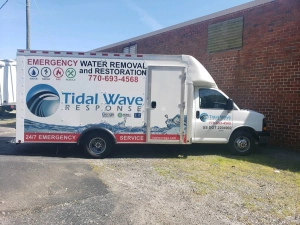
Damage Restoration Services in Atlanta
Response Time
How Water Damage Can Destroy Your Home’s Structure A leak…
How Soon Should Fire Damage Restoration Begin After a Fire?…
Environmental Impact of Flooding Flooding is a natural hazard with…
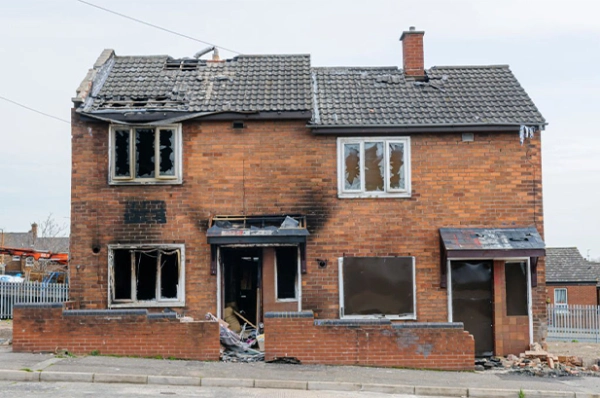
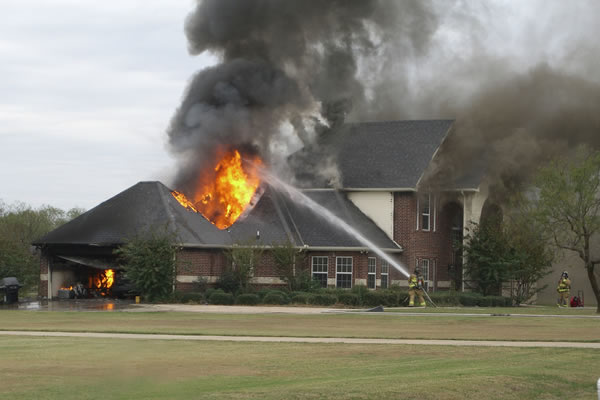
Fire damage goes a lot deeper than what you can see from the doorway. Tidal Wave Response works with homeowners and property managers who are facing the overwhelming task of figuring out what comes next after a fire, and the restoration process involves a lot more than cleaning up soot and replacing drywall. Structural integrity, smoke penetration, water damage from firefighting efforts, and air quality all have to be assessed and addressed before a building is safe to occupy again. Here is how restoration professionals repair a fire-damaged structure from the ground up.
No one walks into a fire-damaged building and starts pulling debris out without an assessment first. Structural engineers or certified inspectors can evaluate load-bearing walls, floor joists, roof trusses, and foundation elements before work starts. This identifies what's compromised, what's salvageable, and what poses an immediate collapse risk.
Inspectors look for char depth in wood framing as well because it indicates how far heat penetrated the material. Shallow charring on a beam can sometimes be stabilized. Deep charring that reaches the structural core usually needs replacement. Steel components get checked for warping and loss of tensile strength, since high heat permanently alters metal's load-bearing capacity. Concrete and masonry are tested for spalling and cracking that develop when the moisture trapped inside rapidly expands during a fire.
Smoke travels. It moves through HVAC systems, penetrates wall cavities, seeps under door frames, and deposits on surfaces in rooms that never had direct flame contact. Soot is acidic and actively corrodes metal fixtures, degrades drywall paper, stains porous materials, and continues damaging surfaces if it isn't removed within the first 24 to 72 hours.
Restoration technicians categorize smoke residue by type because different fires produce different residues that require different cleaning methods. Wet smoke from low-heat, smoldering fires leaves a thick, sticky residue that smears if you wipe it incorrectly. Dry smoke from fast-burning, high-temperature fires produces a powdery residue that spreads easily. Protein residue from kitchen fires is nearly invisible but produces a powerful odor and bonds to surfaces.
During fire damage restoration, technicians use dry chemical sponges, HEPA vacuums, and alkaline or acidic cleaning agents matched to the residue type and surface material. Improper cleaning can push soot deeper into porous materials or chemically react in ways that accelerate deterioration.
Thousands of gallons of water are discharged during a structural fire. The water saturates subfloors, insulation, walls, and ceiling assemblies. By the time restoration crews arrive, secondary water damage is already underway, and mold can begin developing in as little as 24 to 48 hours in wet, warm conditions.
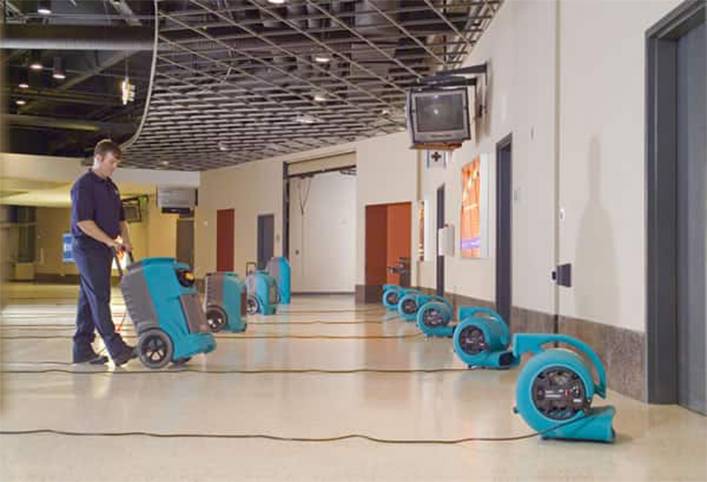
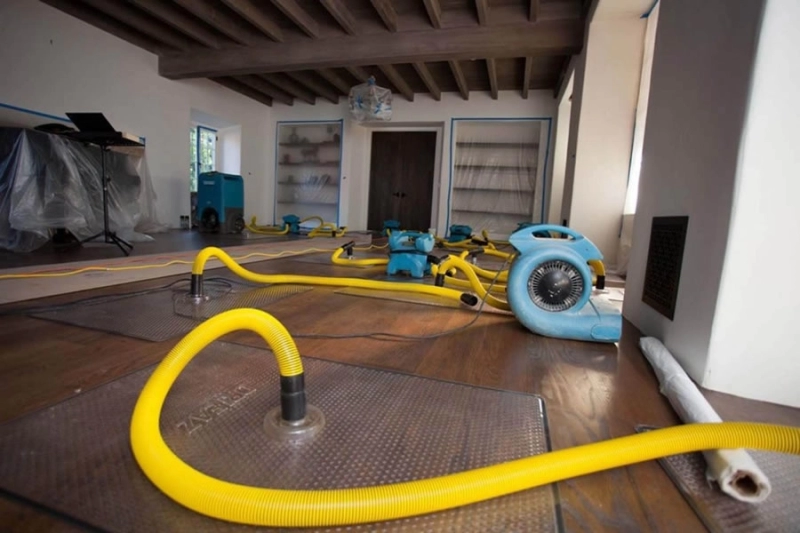
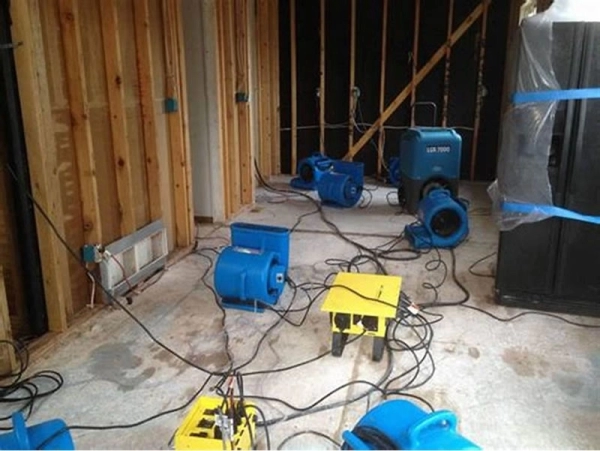
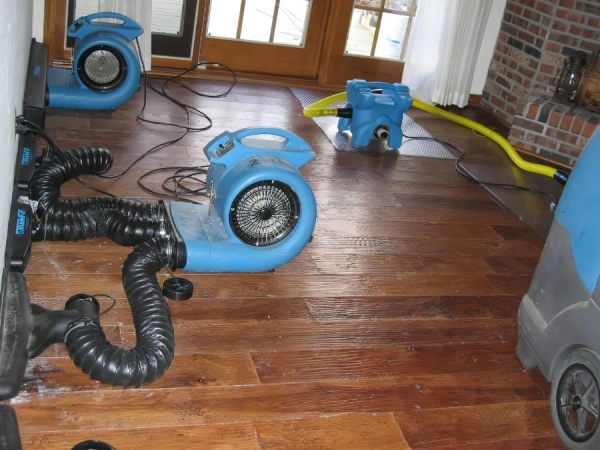
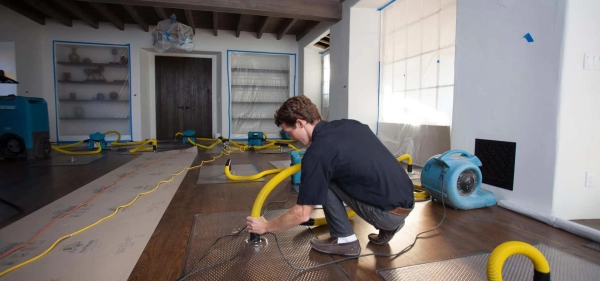
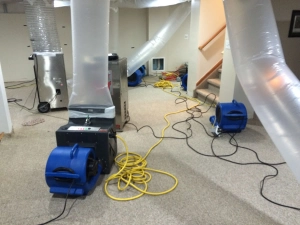
Crews extract standing water first using truck-mounted extraction units, then deploy industrial air movers and dehumidifiers. Moisture meters and thermal imaging cameras map the extent of saturation, including in areas that look dry on the surface. Insulation almost always has to come out because it retains moisture and loses its integrity when wet.
The scope of fire damage restoration expands dramatically when water damage is extensive. Subfloor sheathing, wall framing, and ceiling joists that stay wet too long develop microbial growth that has to be addressed before any rebuild work begins. Restoration teams document the moisture readings throughout the drying process to demonstrate to insurance carriers that materials were dried to industry-standard levels before enclosure.
When fire compromises a load-bearing wall, a ridge beam, or a floor joist system, restoration shifts into structural reconstruction. This work requires permits, engineered repair plans, and licensed contractors.
Damaged studs and joists are sistered or fully replaced, depending on the degree of char and structural compromise. A sistered repair involves attaching a new structural member directly alongside the damaged one to restore load capacity. Full replacement is required when the existing member can't support the attachment or when the char has penetrated past the outer third of the material. Ridge beams and headers that support roof loads get evaluated by an engineer who specifies the exact repair method and material grade.
The structural repair phase in fire damage restoration in Tucker, GA has to be inspected and approved before walls are closed. Inspectors verify that all replaced members meet current code, that connections are properly fastened, and that the repaired assembly can carry the design loads.

The rebuild phase doesn't start until mitigation is complete and approved. That means structural repairs are inspected, moisture levels are documented and verified, and all damaged material has been removed. Then the actual reconstruction begins, and coordination between the restoration team, the insurance adjuster, and the building department runs in parallel.
Insurance adjusters work from a scope of loss document that itemizes every line of damage and repair. Restoration companies submit detailed estimates. Supplement requests go in when additional damage gets uncovered during demolition or when code upgrades are required by the jurisdiction. Missing this step means the homeowner absorbs costs the carrier should have covered.
Permitting, framing inspections, rough mechanical inspections, and final inspection all happen in sequence during the rebuild. A restoration company that manages the full project handles the scheduling, documentation, and communication with all parties. The result is a rebuilt structure that meets current code, is fully documented for insurance purposes, and is ready for a certificate of occupancy.
If your property has sustained fire damage, Tidal Wave Response is here to help. We offer professional fire damage restoration that will get your property back on track. Contact our crew if you have questions or when you're ready to schedule an appointment.