Professional Water & Fire

Damage Restoration Services in Atlanta

15-25 Minute

Response Time

How Water Damage Can Destroy Your Home’s Structure

Recent Posts

How Soon Should Fire Damage Restoration Begin After a Fire?

How Soon Should Fire Damage Restoration Begin After a Fire?…

image
March 30,2026
Environmental Impact of Flooding

Environmental Impact of Flooding Flooding is a natural hazard with…

image
November 22,2023
Water Damage Levels and How to Handle the Cleanup

Water Damage Levels and How to Handle the Cleanup Water…

image
November 16,2023
How Water Damage Can Destroy Your Home’s Structure
April 05,2026

How Water Damage Can Destroy Your Home’s Structure

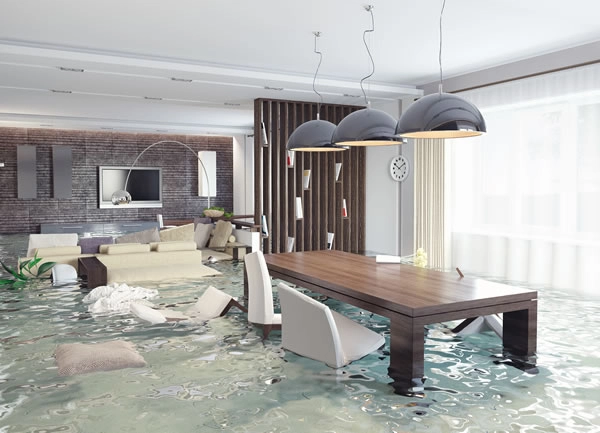
A leak or flood that seems manageable on the surface can work its way into the bones of a house before the full extent of the damage becomes visible. At Tidal Wave Response, we've walked through homes where the structural consequences of water damage far exceeded what the homeowner expected when they first called us. If you want to understand what water does to a home over the long haul, this covers what we see on the job.

How Water Finds Its Way Into Structural Materials

Water doesn't need a dramatic entry point. A slow drip behind a wall, a failed flashing joint around a chimney, or a cracked foundation seal can introduce enough moisture to begin degrading structural materials without any visible signs inside the home. Roof leaks are particularly deceptive because water travels along rafters and sheathing before it drips down to the ceiling.

Once moisture penetrates the envelope of a house, it moves through porous materials. Concrete wicks water upward. Wood absorbs it across the grain, and insulation holds it against framing members for weeks. The path water takes is rarely straight, which is why a wet ceiling doesn't always tell you where the leak started.

Plumbing failures inside wall cavities follow the same pattern. A pinhole leak in a supply line will saturate the surrounding framing and subfloor before it shows up as a stain. By that point, the wood has been wet long enough to begin softening, and depending on the season and temperature, mold may already be establishing itself in the cavity.

What Happens to Wood Framing When It Stays Wet Too Long

Wood framing is the skeleton of most residential construction, and it has a low tolerance for moisture. When the moisture content in wood climbs above 19 percent and stays there, the conditions for wood rot activate. The fungi responsible for rot just need sustained dampness and a moderate temperature to begin breaking down the lignin and cellulose that give wood its structural integrity.

The visible signs of rot are usually late indicators. By the time you can press a screwdriver into a joist and feel it give, the decay has already progressed through a large portion of the wood fiber. Floor joists, wall studs, and roof rafters can lose a large percentage of their load-bearing capacity before anyone notices the problem. Floors that bounce under your feet and doors that no longer close square are early indicators of framing compromise.

Replacing rotted framing may require opening walls, pulling subfloor sections, or fully replacing the damaged sections. The cost scales with how long the moisture was present and how far the rot spread. Water damage restoration at the framing level is more involved than surface-level remediation, and it's almost always more expensive the longer it's deferred.

How Water Damage Compromises Load-Bearing Walls and Supports

Load-bearing walls transfer the weight of the structure above them down to the foundation. When moisture infiltrates the walls, whether from a roof leak, a plumbing failure, or flooding, it doesn't discriminate between decorative and structural members. A saturated bottom plate sitting on a concrete slab will begin to deteriorate in a matter of weeks under the right conditions.

The structural risk compounds when the damage reaches the connection points between members. This includes the places where beams bear on posts, joists connect to ledger boards, and rim joists anchor to the foundation. Hardware corrodes, wood swells or splits, and the connections that transfer load across the structure become unreliable. A wall that looks intact from the outside can still have compromised framing.

Columns and posts in crawl spaces and basements are vulnerable because they're close to areas where moisture accumulates. A wood post standing in a crawl space with chronic humidity or standing water will deteriorate at the base first, without any indication from the floor above, until the compression load causes visible deflection. Structural materials that absorbed moisture for an extended period have to be assessed carefully, and replacement is sometimes the only sound option when the damage has had time to set in.

What Concrete and Masonry Foundations Do Under Prolonged Water Exposure

Concrete foundations are durable, but they're not impervious to water. Concrete is porous at a microscopic level, and water that contacts it carries dissolved minerals, acids from soil, and, in colder climates, freeze-thaw cycles that expand cracks from the inside. A hairline crack that lets in water during heavy rain will widen incrementally every winter. When left ignored for years, it becomes a structural liability.

Masonry block foundations face the same process, and they have mortar joints that deteriorate faster than the blocks themselves. When mortar erodes, blocks shift, and the wall loses its ability to resist lateral pressure from soil. Bowing or cracking in a basement wall is an indicator that hydrostatic pressure has exceeded what the wall can resist without intervention.

Efflorescence is the white mineral deposits that appear on concrete and masonry surfaces. It's a diagnostic marker worth taking seriously because it means water is moving through the material and depositing salts as it evaporates on the surface. In many situations, it's a sign that the waterproofing or drainage around the foundation is failing, and the structural consequences of ignoring that will accumulate.

How Fast Water Damage Progresses and Why Response Time Matters

Within the first 24 hours of a water emergency, drywall absorbs moisture and begins to swell, and any standing water on a subfloor begins penetrating into the joist cavities below. Within 48 to 72 hours, mold colonies can establish on wet organic materials. After a week, the remediation scope expands dramatically.

Waiting to call a professional because the damage looks contained is one of the most common reasons a manageable situation becomes a major structural repair. Visible water is only part of the picture. Moisture trapped inside wall assemblies, under flooring, and in subfloor systems continues to cause damage after the surface appears dry.

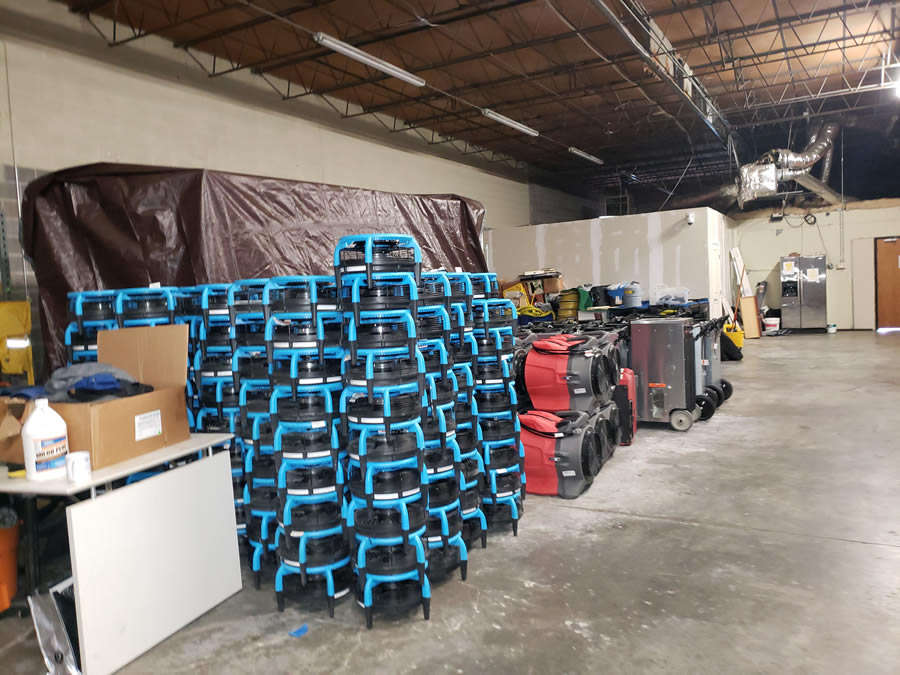
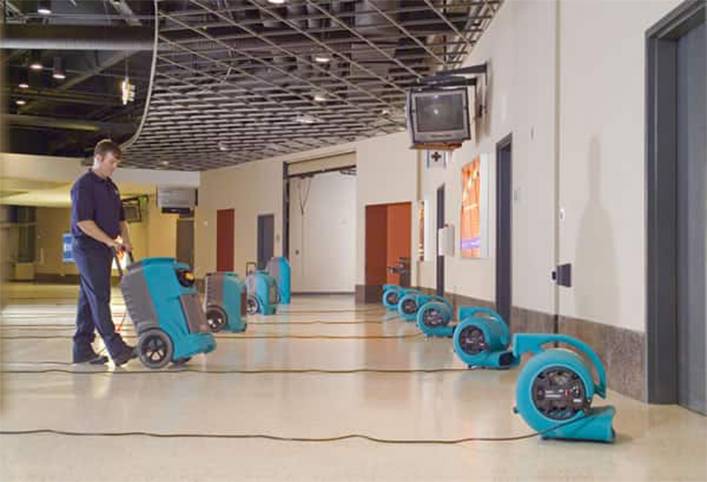
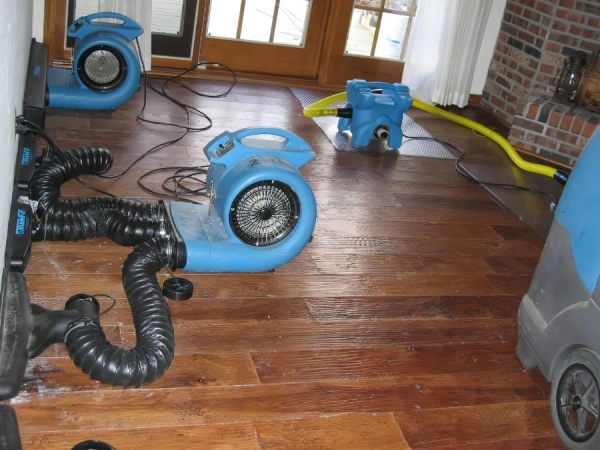
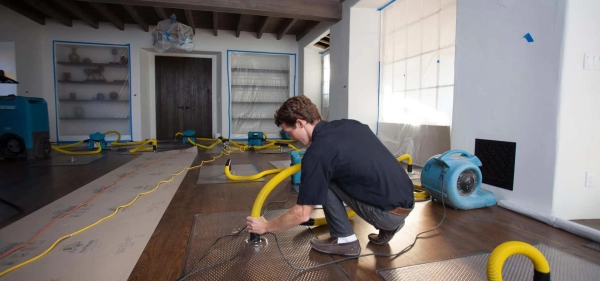
The equipment used in professional water damage restoration includes high-capacity dehumidifiers, air movers, moisture meters, and thermal imaging cameras. They work to extract water from cavities that won't dry through passive ventilation alone. The difference between a three-day remediation and a three-week structural repair is almost always the speed of the initial response.

Do You Need Professional Water Damage Restoration?

If your home has experienced flooding, a plumbing failure, or a roof leak, contact Tidal Wave Response before the damage progresses. We can get your home dried out correctly so you can avoid major repairs.